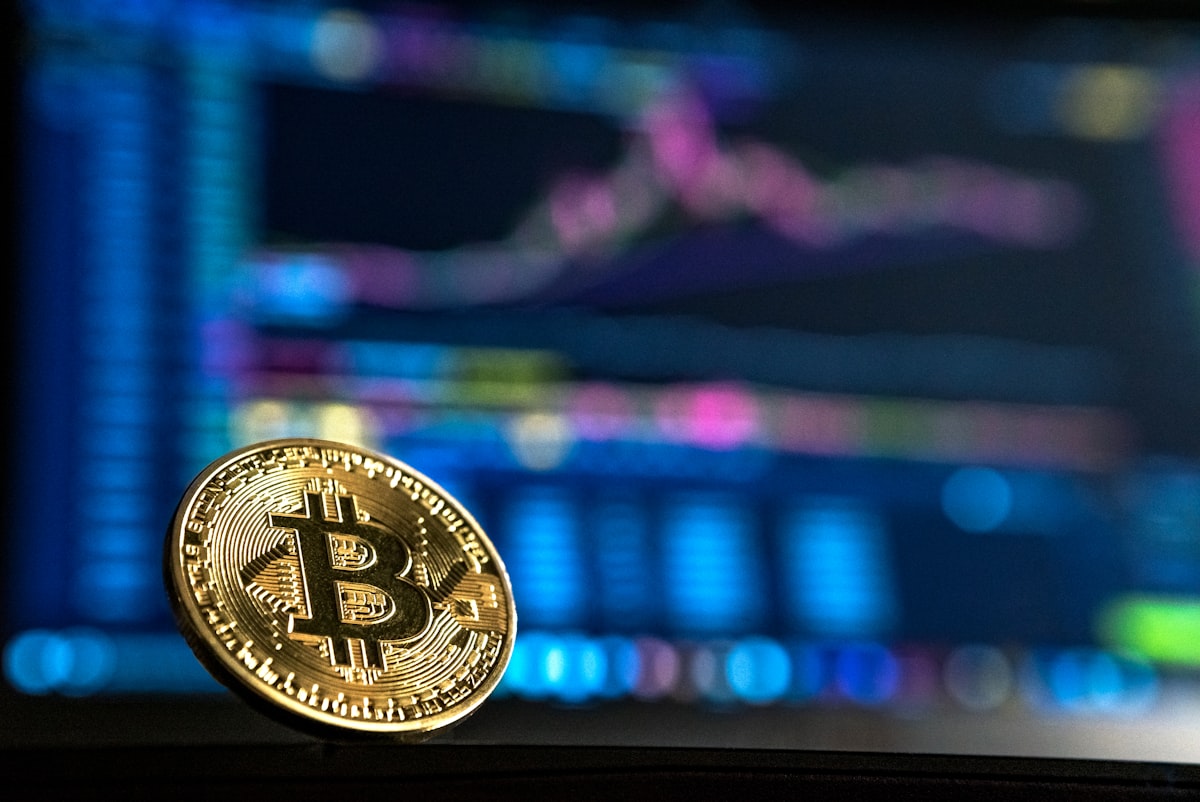
The introduction of Ordinals and Inscriptions changed Bitcoin forever. It allowed users to write arbitrary data (images, text, JSON) directly onto the Bitcoin blockchain. This led to the BRC-20 craze—where people simply "invented" tokens by writing a deployment JSON onto a satoshi.
But Digital Matter Theory (DMT) takes a completely different philosophical and technical approach. It argues that digital assets should not be *invented arbitrarily* out of thin air. Instead, they should be *discovered* from the inherent mathematical data that already exists within the Bitcoin blockchain.
What is Digital Matter Theory (DMT)?
DMT proposes that the raw data generated by the Bitcoin network—such as block sizes, block heights, nonces, timestamps, and hashes—forms a type of "digital matter."
Just as physicists discover elements in the natural world by observing patterns in atoms, DMT suggests that developers can "discover" new digital substances by applying pattern recognition to Bitcoin's historical and ongoing block data.
Instead of a developer deciding, "I am going to create a token with a 1 billion supply," DMT dictates that the token's parameters must be derived directly from the blockchain's physics. This creates Non-Arbitrary Tokens (NATs).
The $NAT Token: The First Application of DMT
$NAT (Non-Arbitrary Token) is the flagship implementation of Digital Matter Theory. It was created to serve as a universal currency within this new digital ecosystem.
Here is how it works practically:
1. Pattern Recognition (The UNAT Standard)
Under the DMT framework (specifically the UNAT standard), the minting parameters of a token are tied to specific fields in a Bitcoin block.For example, instead of setting a fixed mint amount, the amount of $NAT someone can mint might be tied to the bits field (a representation of mining difficulty) of a specific block.
2. Discovery vs. Creation
Because the data in Bitcoin blocks has existed since 2009, the supply and distribution rules of $NAT have technically *always existed*. They were just waiting for someone to build the DMT protocol to recognize and index them. You aren't creating a new token; you are extracting value that Bitcoin's math has already generated.3. Solving the Miner Subsidy Problem
As Bitcoin undergoes halving events every four years, the block reward given to miners drops. Eventually, miners will have to rely entirely on transaction fees, which could threaten the network's security.DMT and $NAT offer a radical solution. By tying token generation to block data, a new layer of value is created every time a block is mined. Some DMT protocols propose directing newly generated $NAT (or similar tokens) directly to the miners who win the block. This essentially creates a parallel, non-inflationary subsidy for Bitcoin miners, keeping them incentivized even when BTC rewards dwindle.
Why Does DMT Matter?
If BRC-20 tokens are like printing fiat money (you can just type a number and deploy it), DMT assets are like mining gold.
Conclusion
Digital Matter Theory and $NAT represent a massive philosophical shift in crypto. They move us away from the "ICO/Token deployment" era—where value is dictated by founders—into an era of discovery, where value is extracted from the unchangeable, mathematical heartbeat of the Bitcoin network itself.