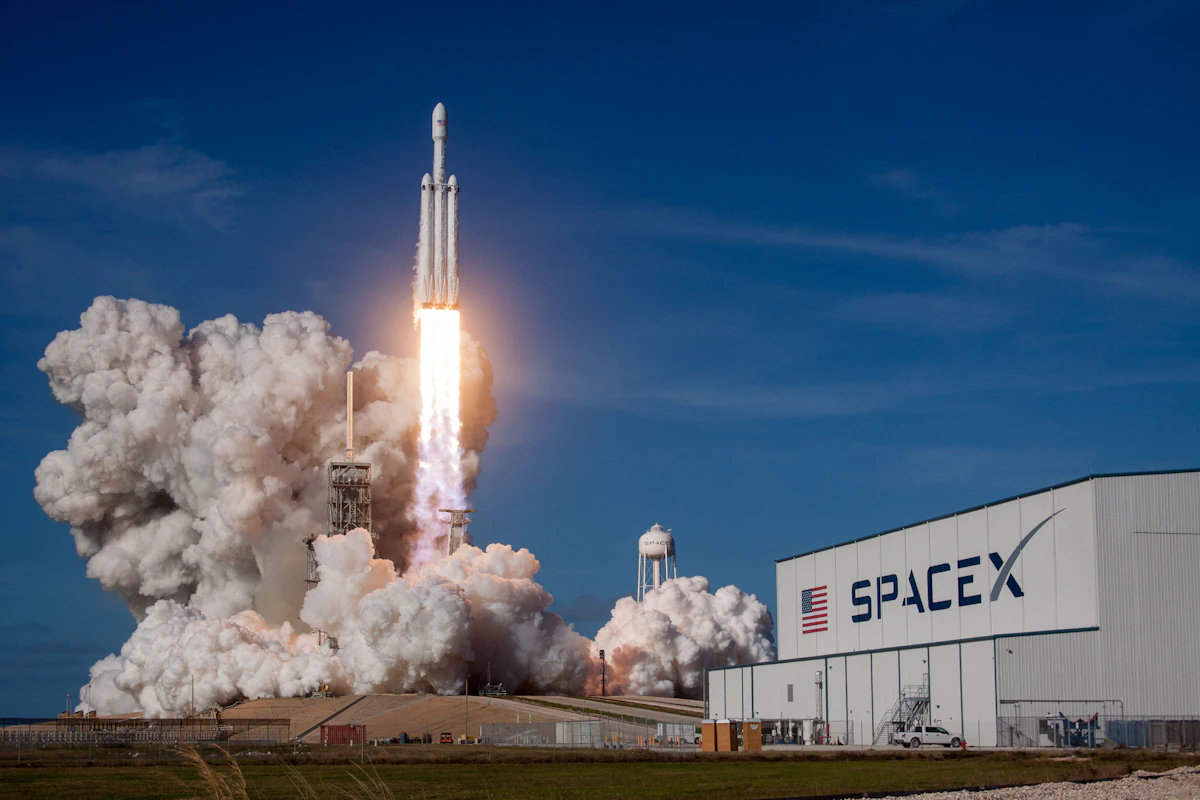
SpaceX just closed the largest acquisition in AI tooling history — and it's coming from the least-expected place. The company known for launching rockets has agreed to acquire Cursor, the AI-first code editor that sparked the "vibe coding" movement, in a $60 billion all-stock deal announced this week.
The deal values Cursor at roughly 15x its last reported valuation, a signal that the market for AI-powered developer tools has officially entered mega-round territory. For context, that's more than GitHub's valuation at most points in its first decade.
Why SpaceX Bought Cursor
On the surface, SpaceX building AI coding tools seems like a detour. But when you look at the scale of SpaceX's software needs, it makes strategic sense. The company's Starship program alone involves millions of lines of flight control software, real-time embedded systems, and ground infrastructure code — all requiring rigorous verification and rapid iteration.
Traditional aerospace software development cycles are slow by design. Testing windows are narrow, regulatory scrutiny is high, and bugs can be catastrophically expensive. Cursor's AI pair programming model, which allows developers to describe what they want in plain language and get working code, could compress those cycles significantly.
What Cursor Brings to the Table
Cursor burst onto the scene as a fork of Visual Studio Code, reimagined from the ground up around large language models. Its defining feature is deep IDE integration — not just autocomplete, but genuine multi-file reasoning, bug detection, and test generation. It became the tool of choice for indie developers and startups who valued speed over ceremony.
The "vibe coding" label comes from Cursor's conversational interface: describe your goal, get code, iterate. It's a workflow that resonates particularly with founders who need to move fast and don't have large engineering teams.
For SpaceX, Cursor's approach to AI pair programming could be adapted into a domain-specific tool for aerospace — handling regulatory compliance, hardware interface code, and simulation tooling that standard LLMs struggle with.
The Competitive Landscape
The acquisition lands SpaceX directly in competition with Anthropic and OpenAI, both of which have developer-facing API businesses that serve as the backbone of many AI coding tools today. Cursor itself was built on top of multiple LLM providers.
By owning Cursor, SpaceX gains a proprietary channel for AI model deployment — one that can be fine-tuned on SpaceX's internal codebase and used to train domain-specific models without relying on third-party APIs. It's a classic vertical integration move.
Other major players are watching closely. Microsoft (which owns GitHub Copilot), Google (via Gemini in IDEs), and Amazon all have skin in the AI developer tools game. The SpaceX-Cursor deal signals that the next frontier isn't just about building AI models — it's about owning the development environment where those models get used.
Implications for Builders
For developers and technical founders, the SpaceX-Cursor deal has a few immediate implications:
1. AI coding tools are now enterprise-grade. A $60B acquisition validates that vibe coding isn't a toy — it's a serious productivity multiplier being priced like one. Expect more enterprise IT departments to start evaluating AI coding assistants seriously.
2. Vertical integration is the new moat. SpaceX buying Cursor mirrors Apple building chips for its own stack. If you're building AI developer tools, think about what proprietary data or distribution advantages you can lock in.
3. The "indie developer" era of AI tooling is maturing. Cursor grew through bottom-up adoption by individual developers. Now that it's inside SpaceX, expect to see more features designed for large teams and regulated industries, not just solo hackers.
What Comes Next
Cursor will likely continue operating as a standalone product for external users, but with tighter integration into SpaceX's infrastructure. Internal teams at SpaceX may get access to custom models trained on aerospace-specific codebases — something that would be a significant competitive advantage for recruiting top engineering talent.
The deal is expected to close in Q3 2026, pending regulatory review. Given SpaceX's existing relationships with federal agencies and the strategic nature of the acquisition, antitrust concerns are expected to be minimal compared to typical Big Tech mergers.
For now, the vibe coding era just got a lot more expensive — and a lot more interesting.